What Happens If Your Hybrid Battery Dies?
The story of hybrid cars begins in 1997 with the debut of the Toyota Prius, and of course, it took a few years for these innovative vehicles to build their reputation. However, once drivers realised how much they could save on gas with electric motors assisting the engine, hybrids quickly became mainstream. Now, decades later, many of these hybrids are still on the road, though some have outlived their original batteries. Then begs the question: Is a dead hybrid battery the end of your car, or is life left?
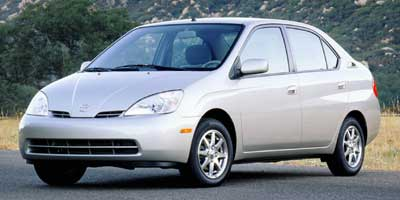
The answer isn't entirely straightforward, but it's more hopeful than you assume. If your hybrid's high-voltage battery calls it quits, you're probably going nowhere. This battery isn't just some optional extra in most hybrid systems; it's essential to the drivetrain. And what happens after this battery dies depends on the make and model of your car. Your hybrid will either switch to gas-only mode, refuse to move, or run poorly.
The high-voltage battery is the primary power source for the electric motor, and it collaborates with the internal combustion engine (ICE) to provide instant torque when you need acceleration and sip fuel more efficiently. In fact, that's why you enjoy those quiet, emissions-free moments when the vehicle is running at low speeds. And this high-voltage system handles the vehicle propulsion, unlike the regular 12-volt battery (which starts the petrol engine and runs the lights and radio). Normally, the hybrid car batteries can last up to 10 to 15 years, or 120,000 to 150,000 miles, depending on driving conditions, maintenance schedules, and driving habits.
Can your hybrid car run without the battery?
In most cases, a petrol-electric hybrid (or a plug-in hybrid) vehicle won't operate if its high-voltage battery completely dies. The hybrid battery enables the entire hybrid function, and without it, your car's computer typically won't even allow the system to start up properly. Actually, a completely dead battery can be a showstopper in most modern hybrids, especially Toyota and Lexus models. Without it, the car often won't even enter "READY" mode; hence, the electric motor and gasoline engine will not function. However, there are a few exceptions where some models, like the early Toyota Prius, might run on ICE alone for short distances. Make no mistake, though, you'd be missing everything that makes a hybrid worth driving — the smooth electric starts, the fuel-saving regenerative braking, the seamless power boost when accelerating.
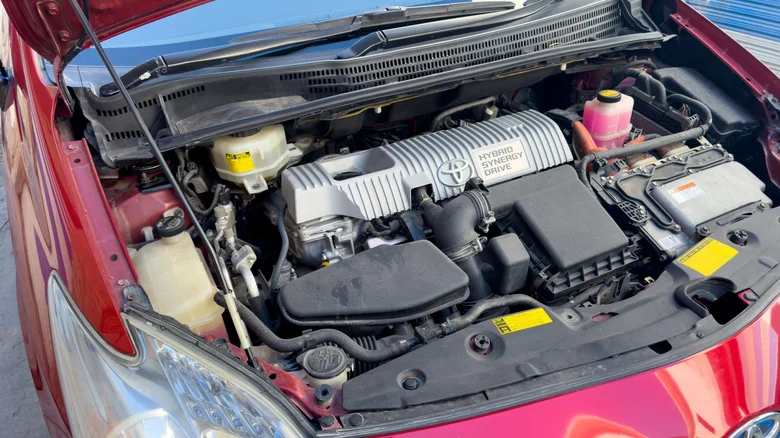
Of course, not all battery issues are an immediate disaster for your hybrid. There's an important distinction between a battery that's simply wearing out and one that's dead. Frankly, a degraded but still functioning battery might let you keep driving, but with some frustrating limitations. For example, you'll likely notice warning lights on the dashboard, slower acceleration, reduced fuel economy, or difficulty starting the car. And although the car is operational, it's not performing at its best. The silver lining here is that complete failures rarely happen without warning. Your hybrid typically gives you plenty of signs that the battery is struggling before it completely quits.
What happens to performance and long-term impacts?
Certainly, when your hybrid battery begins to decline, it's about much more than just an annoying warning light. The first thing you'll notice is that the instant electric torque you relied on for smooth acceleration has started fading away. Actually, as the battery's ability to assist reduces, you'll find yourself waiting longer for the power to kick in, and your hybrid becomes more like a conventional gas-powered car. You can also not downplay the stellar fuel efficiency you bought the car for, which starts disappearing. The vehicle is now dependent on ICE, and the gasoline engine in your hybrid wasn't designed to carry the entire load alone. What was sipping fuel is now a guzzler, meaning you're paying more at the pump.
Typically, every car makes some noise, but your hybrid’s sounds can actually tell you a lot about its battery health. If you notice unusual noises such as loud cooling fans, persistent whirring, or odd humming coming from the battery area during start up or when charging, its worth paying attention. While some operational sounds are normal, noticeable changes in volume or pitch can be early warning signs. Additionally, a properly functioning hybrid battery charges steadily during braking and coasting, then discharges smoothly when you accelerate. However, if you notice your charge indicator bouncing around erratically, refusing to reach full charge during normal driving, that’s a red flag. These irregular patterns often mean individual battery cells are weakening or the battery management system is struggling to balance the charge.
Under the hood, the problems go even deeper. You see, that extra load carried by the ICE causes frequent start-stop cycles, increasing wear and tear to the cooling system and pistons. As a result, what might seem like a minor strain today could lead to premature wear, potentially shortening the engine's lifespan. Consequently, a failing hybrid battery can create problems throughout your entire electrical system. When the battery starts delivering inconsistent voltage or drawing power erratically, it puts unnecessary strain on sensitive components.
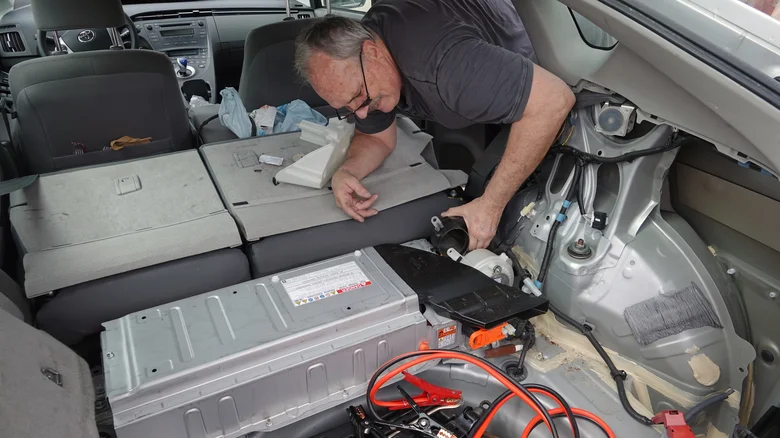
Indeed, prompt attention to battery problems isn't just about maintaining performance; it's a smart financial decision. Your hybrid was designed to be durable, and with regular check-ups, timely replacement when needed, and other maintenance tips, most hybrid batteries can deliver their full lifespan potential.