Common Problems with Yamaha R6 From an Owner’s Perspective
With a new Yamaha R6 retailing at $20,249, it isn’t one of the cheapest Yamaha bikes you could buy today. Still, many riders are willing to pay a premium for the Yamaha YZF-R6. Its razor-sharp handling, aggressive styling, and high-revving powerplant are engineered for precision and speed. In fact, for many motorcyclists, the R6 represents a blend of racing heritage and street credibility.
Underneath its striking appearance lies a 599 cc inline-four engine that produces 117 horsepower at a screaming 14,500 rpm. This is coupled with its lightweight aluminum Deltabox frame and a race-tuned suspension, resulting in an adrenaline-charged ride that begs to be pushed to its limits. While Yamaha has not officially confirmed the top speed, independent tests indicate the bike can reach a staggering 162 mph. This performance places it in an elite category, rivalled by legends like the YZF-R1M and FZR1000.
However, as with any performance machine, the R6 comes with its fair share of quirks and challenges. Most owners have raised concerns about failing ignition systems, slow cold starts, rod bearing problems, and issues with the throttle position sensor.
Common problems with the Yamaha R6
One of the common challenges reported by many Yamaha R6 owners is a failure to start. Typically, this is caused by a dead battery that fails to power the starter. You might even hear a distinct clicking sound as the starter tries to engage, but without enough power, the ignition coil simply cannot fire properly. As one rider explained, “So when I try to start my bike it just clicks from the starter relay. I charged my old battery, wouldn't start, bump started it and it ran until I turned it off, wouldn't re-start. So I bought a new battery, just put the new battery in and it is doing the same thing, the starter relay just clicks.”
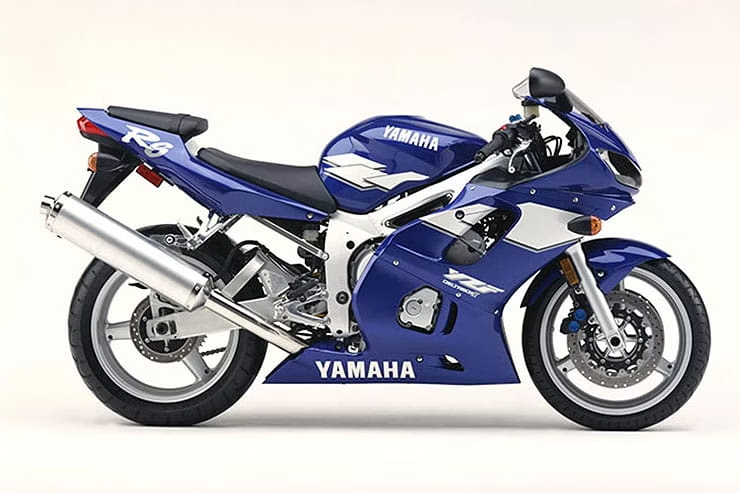
The Yamaha R6 is a fast bike, and its high-revving engine, combined with its compact design, puts pressure on the cooling system, particularly during traffic or in hot weather, resulting in radiator or hose failures, undetected coolant leaks, and overheating that can lead to a decline in performance. A few riders were succinct and noted that the R6 would “overheating, reaching up to 248 degrees. I performed a coolant flush, but it continues to overheat. The coolant overflow reservoir has a small crack, yet it was full when I checked it after the flush.”
Older models (particularly those of the 1999-2002 model) are also prone to second-gear slip, which normally involves internal transmission repair. One Reddit user wrote, “2nd gear transmission issues if it was wheelied a lot and slammed into 2nd, can damage or bend the shift forks and shift dogs.”
What else might affect your Yamaha R6?
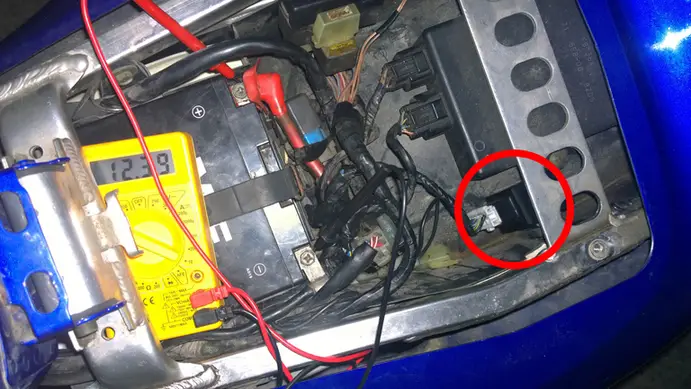
It is also not unusual for older Yamaha R6 models to experience electrical issues. In fact, problems such as flickering headlights or a malfunctioning dashboard are common. These issues are often attributed to simple factors, such as corroded electrical connectors or water infiltration into sensitive components. Naturally, the fuse box and the main wiring harness tend to be the most vulnerable parts of the system over time. One R6 owner commented, “when flashing the lights there is like a 1-2 sec delay, and everything else dimms. So I wanted to swap to led, I have bought some good leds but as I expected the problems just got worse, they light up great but there is flickering and high beams almost completely turn off the lights in my dash.”
Luckily, you can inspect the connectors in the headlight switch circuit. Corrosion in these plugs can cause a significant voltage drop, resulting in weak or flickering lighting. Any buildup you discover will need to be thoroughly cleaned or, if necessary, repaired. In fact, if you are unfamiliar with how this type of problem manifests, you might search for the "SV650 green connector of death" online. It serves as a perfect example of how corrosion can severely impact electrical power delivery in motorcycles.
Although the R6 has been praised for its good suspension in terms of track performance, it has an infamous reputation for being highly stiff for daily riding. Long rides can cause discomfort to daily riders, primarily due to the aggressive seating position and harsh shocks. Over time, the fork seals, as well as the rear shock absorbers, may become excessively worn, resulting in reduced precision and handling. One rider noted that, “The R6 is an awesome track bike, it would be great as a daily on twisty roads but not so much for longer commutes and such because of how aggressive the ergonomics are.”